


Cable clutter has a way of becoming invisible. The tangle under a desk gets stepped over, worked around, and eventually just accepted as part of the furniture. But cable clutter carries real costs beyond looking messy — some of them documented in actual research, not just tidiness advice.
None of these costs show up all at once, which is part of why cable clutter is so easy to live with for years. Below are five specific costs worth knowing about, along with what actually helps.
Table of Contents
Cost #1: The Safety Cost
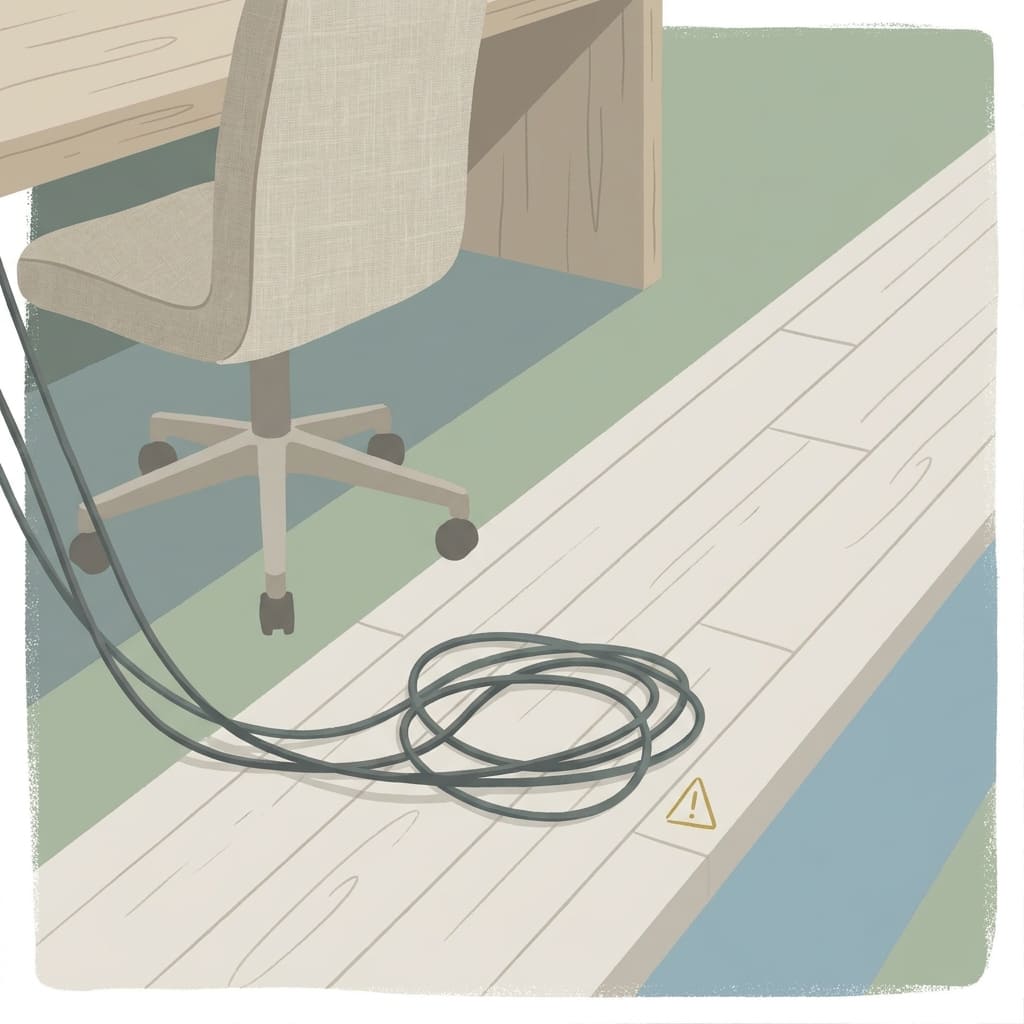
This is the most concrete cost, and the easiest to overlook precisely because nothing bad has happened yet. According to a workplace safety analysis from FFVA Mutual, cables and extension cords are among the most common trip hazards in any workspace, and the National Safety Council reports that slips, trips, and falls cause over 400,000 workplace injuries a year that result in missed work or job restrictions.
Most of that data comes from commercial workplaces, but the underlying mechanics don’t change at home. A cord looped across a walkway or dangling near a rolling chair is a trip hazard regardless of whether the room has a company logo on the door. The average cost of a fall-related injury runs into the tens of thousands of dollars once medical care and lost time are factored in — a genuinely disproportionate outcome for a problem that usually starts with a single loose cord nobody got around to fixing.
Pets and small children add another layer to this particular cost. A cord that’s a minor inconvenience to step over as an adult can be an actual chew or trip hazard for a curious toddler or a dog that’s never learned to avoid it, which is one more reason this cost tends to be underestimated in households without kids or pets yet.
Cost #2: The Stress Cost
This one is less obvious, and more surprising. Cluttered environments — including desk and cable clutter specifically — have been linked to measurably higher stress in research cited by Cleveland Clinic psychologist Dr. Scott Bea, who notes that cluttered environments tax the brain because the surrounding objects compete for attention.
A UCLA study on household clutter found that people who described their spaces as cluttered showed less healthy daily cortisol patterns and reported more stress and fatigue than those who viewed their spaces as restorative. The research doesn’t prove clutter directly causes elevated cortisol, but the association shows up consistently enough to take seriously.
Interestingly, the same body of research found this effect was more pronounced for people who felt personally responsible for managing the clutter, rather than clutter as an abstract visual annoyance. A desk that’s someone’s daily responsibility to maintain carries a different weight than clutter in a shared or occasional-use space.
Cost #3: The Focus Cost
Cable clutter isn’t just visually unpleasant — it may be actively competing for your attention while you’re trying to work. Neuroscience research from Princeton University found that visual clutter competes for the brain’s attention, making it measurably harder to concentrate and process information efficiently.
A tangle of cords sitting in your peripheral vision all day is exactly the kind of low-grade visual clutter this research describes. It’s not dramatic enough to consciously notice most of the time, which is part of why it’s easy to underestimate as a real productivity cost. The brain doesn’t distinguish neatly between “important visual information” and “background clutter” — it processes both, which means every object competing for attention is a small, continuous draw on the same limited cognitive resources used for actual work.
For anyone working from a desk for eight hours a day, that continuous background draw adds up across a week in a way that a single afternoon of distraction wouldn’t. It’s less about any one moment of lost focus and more about a steady, low-level tax on attention that’s easy to miss because it never spikes high enough to feel like an obvious problem.
Cost #4: The Sleep Cost
For anyone with a desk in or near a bedroom — increasingly common with home offices — cable clutter can extend beyond work hours. Sleep experts generally recommend keeping sleeping spaces clean and organized as part of good sleep hygiene, and some research has linked cluttered bedrooms with poorer sleep quality overall.
A visible tangle of cords isn’t the biggest sleep disruptor most people deal with, but for anyone already sensitive to their environment before bed, it’s one more small source of visual noise in a space that’s supposed to help you wind down. In smaller apartments or studio layouts, where a desk setup might be only a few feet from the bed, this overlap is more common than it might seem.
Cost #5: The Equipment Cost
Loose cords get stepped on, rolled over by chairs, and yanked at awkward angles far more often than cords that are properly routed and contained. Over time, that repeated stress is exactly what leads to the fraying, cracking, and connector damage that shortens a cable’s usable life.
Replacing a damaged charging cable or monitor cord isn’t a major expense on its own, but it’s a recurring cost that a slightly better cable routing setup would have avoided entirely. Multiply that by every cord under a typical desk, and the small, avoidable expenses add up faster than most people realize over a year or two.
Why Cable Clutter Is So Easy to Ignore
None of these five costs are dramatic on their own, which is exactly why cable clutter tends to persist for months or years without being addressed. There’s rarely a single bad day that makes the cost obvious — just a slow accumulation of tripping close calls, distracted afternoons, and frayed cords that eventually need replacing.
That’s a pattern worth naming, because it means the fix doesn’t need to wait for a crisis. Addressing cable clutter before it causes a specific problem is cheaper and easier than fixing it after a fall, a damaged cable, or a stretch of unexplained low-grade stress at a cluttered desk. It’s the same logic behind most preventive fixes: the fifteen minutes spent routing cords properly is a lot cheaper than the alternative, whether that alternative is a doctor’s visit, a new charging cable, or just an afternoon that felt harder to focus through than it should have.
The Simplest Fix for Cable Clutter
Most cable clutter under a desk comes down to a small number of cords with nowhere organized to go — a charging cable, a monitor cord, maybe a power strip. A dedicated cable management channel solves this directly by giving those cords one contained, out-of-sight path to run along, rather than letting them hang loose or pile on the floor.
We covered one specific option, including installation, load capacity, and real-world use, in our desk cable tray review, if you’re looking for a low-cost, no-drill way to address the exact under-desk cable clutter described above.
This isn’t the only fix — cable ties, clip-mounted organizers, and full cable sleeves all address the same underlying problem in different ways. But a mounted tray tends to solve the most cable clutter for the least ongoing effort, since cords stay contained automatically rather than needing to be re-bundled every time something changes. That “set it and forget it” quality is really what separates a lasting fix from a one-time tidy-up that slowly unravels over the following weeks.
What to Look for When Fixing Cable Clutter
If you’re addressing cable clutter for the first time, a few priorities are worth keeping in mind:
- Start with the worst offender — usually the desk, since it combines the highest density of cords with the most visible clutter.
- Match the solution to the mess — a small tangle might just need cable ties; a full desk setup usually benefits from a dedicated tray or channel.
- Prioritize no-drill options first — adhesive-mount solutions solve most home cable clutter without committing to permanent changes.
- Don’t forget load capacity — an under-rated organizer that sags under real-world cord weight just becomes a new, smaller version of the same clutter.
- Think about future cords, not just current ones — leaving a little extra room in any cable management solution avoids needing to redo it the next time a new device gets added.
- Set a realistic time budget — most single-desk cable clutter fixes take well under an hour, so there’s rarely a good reason to keep putting it off.
None of these priorities require special tools or expertise. The biggest barrier to fixing cable clutter is usually just getting started, not any technical difficulty in the process itself.
Why Small Fixes Tend to Stick
There’s a reason cable management specifically tends to be a more durable fix than broader decluttering efforts. Unlike a general tidy-up, which requires ongoing maintenance to avoid slipping back into clutter, a mounted cable tray or channel physically prevents cords from returning to their previous tangled state.
That structural difference matters more than it might seem. Willpower-based organization — just being more disciplined about coiling cords neatly — tends to erode over time, especially during busy weeks. A physical constraint that makes the messy version of the setup harder to recreate than the organized one removes the need for ongoing discipline entirely.

Frequently Asked Questions
Is cable clutter actually dangerous, or just messy? Both — cables and extension cords are consistently flagged as a common trip hazard in workplace safety research, in addition to being a cosmetic issue that most people would rather not look at every day.
Does clutter really affect stress levels? Research has found an association between cluttered environments and less healthy cortisol patterns, along with self-reported stress and fatigue, though it doesn’t prove clutter directly causes those effects on its own.
What’s the easiest first step for fixing cable clutter? Starting with the desk is usually the highest-impact move, since it typically has the densest cluster of cords and the most visible clutter in a home office.
Do I need to buy something to fix cable clutter, or can I DIY it? Simple cable ties or velcro straps can help with light clutter, but a dedicated tray or channel is generally more effective for a desk with several permanent cords, since it keeps everything contained without needing to be redone every few weeks.
Can cable clutter actually damage my devices? Indirectly, yes — cords that are stepped on, rolled over, or pulled at odd angles wear out faster than properly routed cords, which shows up as fraying or connector damage over time.
How long does it typically take to fix cable clutter under one desk? Most single-desk setups can be reorganized in well under an hour, including installing a cable tray or similar organizer, which makes this one of the higher-value, lower-effort home improvements available.
The Bottom Line
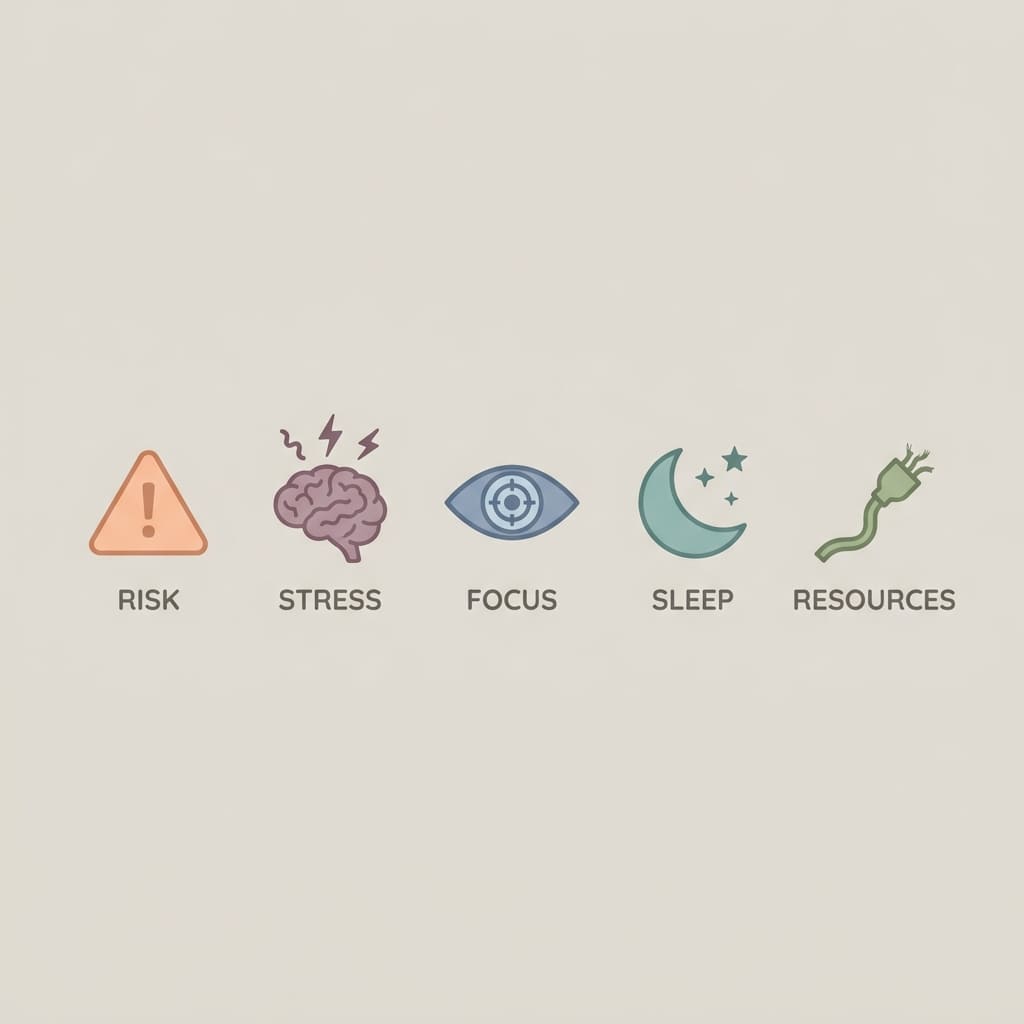
Cable clutter is easy to dismiss as a minor cosmetic issue, but the actual costs — trip hazards, elevated stress, reduced focus, disrupted sleep, and shortened equipment life — are more concrete than they first appear. None of them require a dramatic fix, either.
A single afternoon spent routing the worst offenders into a contained cable tray or channel addresses most of what’s described above, without requiring a full workspace overhaul or a significant budget. The return on that small time investment — fewer trip risks, a calmer-looking desk, and cords that last longer — is disproportionately large relative to the effort involved.
If there’s one takeaway worth remembering, it’s that cable clutter rarely gets worse suddenly. It accumulates quietly, one new cord at a time, until the desk underneath looks nothing like it did a year ago. Catching it early is easier than untangling it later.
This article reflects publicly available research and general home-organization guidance; individual experiences with clutter and stress can vary based on personal circumstances and environment.