

Most people never actually measure how disorganized their kitchen storage is — it just feels vaguely annoying until one day it feels genuinely bad, usually right when you’re already rushing to get dinner on the table. This is a quick, honest way to put an actual number on it, using eight simple questions rather than a vague sense that “the cabinets are a mess.”
The point isn’t to make anyone feel bad about their kitchen. It’s to turn a fuzzy, hard-to-act-on feeling into something concrete enough to actually address, since “my kitchen storage feels off” rarely leads to a fix the way “I scored a 6 out of 8” tends to.
Table of Contents
The Kitchen Storage Score: Answer These 8 Questions
Give yourself one point for every question you answer “yes” to. Be honest — the point of a kitchen storage score is accuracy, not a flattering result, and there’s no one grading you on the outcome besides your own future convenience.
1. Do you regularly move two or more pots to reach the one you actually need?
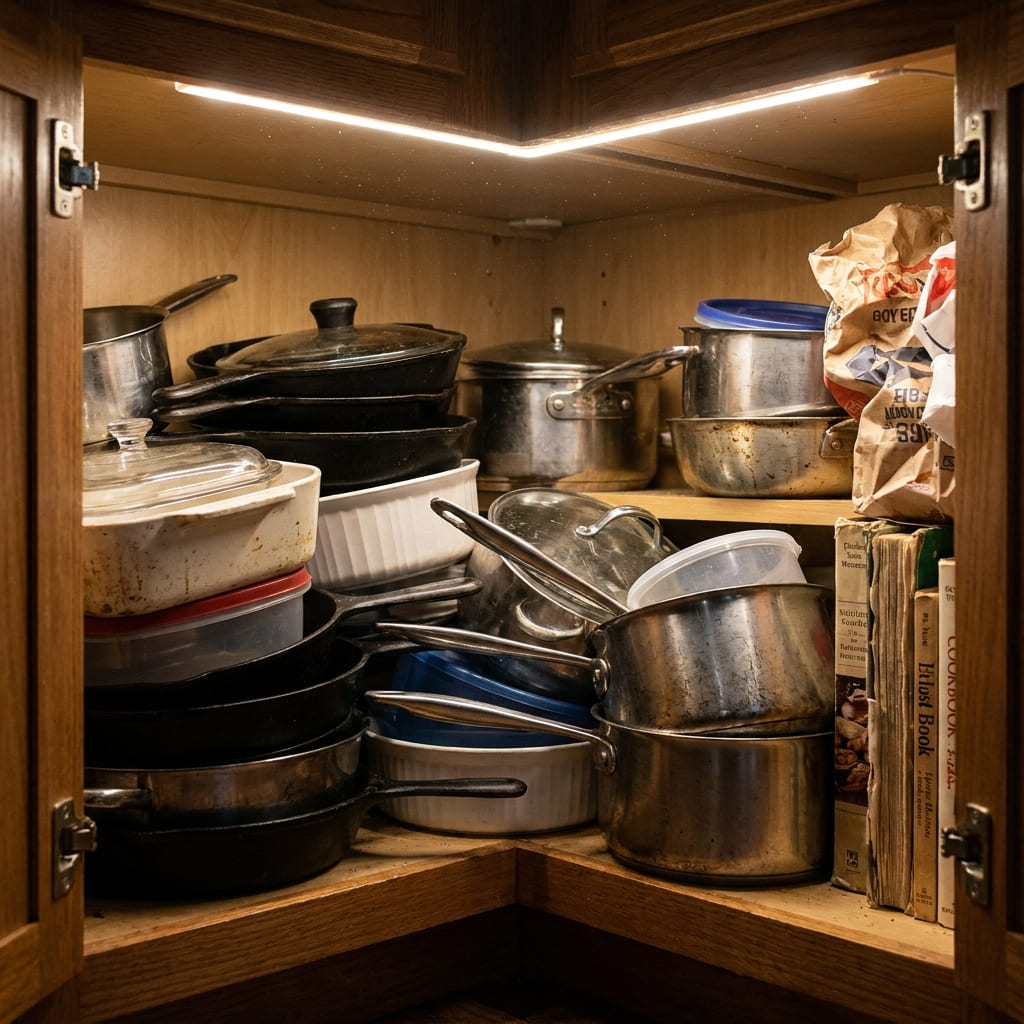
2. Is there at least one cabinet you actively avoid opening because of what falls out?
3. Do you own a pot or pan you haven’t used in six months, partly because you forgot where it was?
4. Does anything crash, tip, or slide when you open your main pot cabinet?
5. Do you have a “lid graveyard” — a drawer or bin of mismatched lids with no clear system?
6. Is there a corner or under-sink space in your kitchen you’ve basically given up on organizing entirely?
7. Have you ever bought a pot or pan you already owned because you couldn’t find the original?
8. Does the physical act of gathering cookware ever make you less excited to cook in the first place?
Add up your total. That number is your kitchen storage score, and it maps to a few honest categories below. Most people, once they actually sit down and answer these honestly rather than estimating, are somewhat surprised by where their number lands — usually higher than expected, occasionally lower.
What Your Score Actually Means
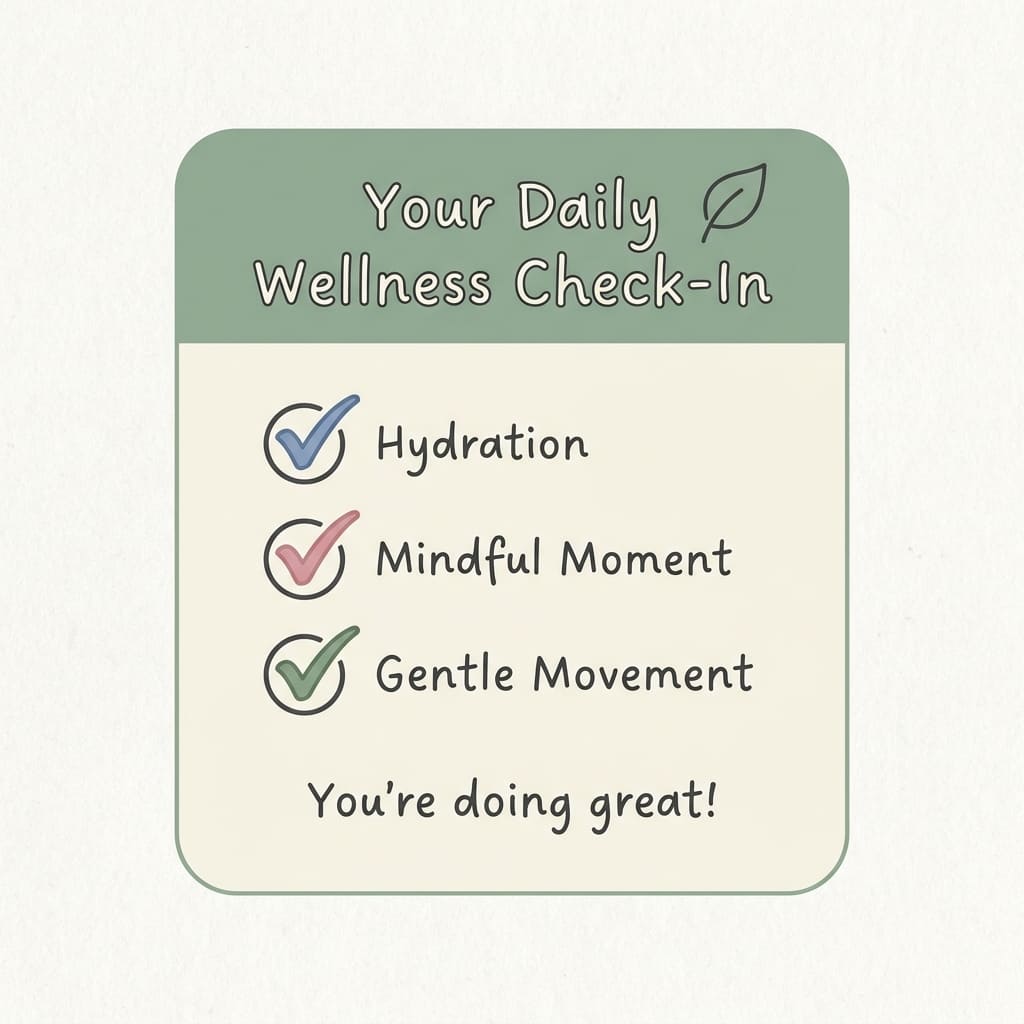
0–2: Your kitchen storage is genuinely fine. A couple of yeses here is normal — no kitchen is perfectly optimized, and this range reflects minor annoyances rather than a real problem worth solving. Spending money or effort fixing a score this low is usually not worth the trouble.
3–5: You have a real, specific storage problem. This range usually means there’s one or two actual trouble spots — a bad cabinet, a lid situation, a corner that never got addressed — rather than kitchen-wide chaos. Fixing the specific spot dragging your score up is usually enough to bring the whole number down noticeably, often within a single afternoon of focused effort.
6–8: Your kitchen storage is actively working against you. At this range, the clutter isn’t cosmetic anymore — it’s costing real time, occasionally money (see: buying duplicates), and probably some amount of daily frustration that’s easy to underestimate until it’s put into numbers like this. This is the range where a genuine fix, rather than a quick tidy-up, tends to make the most noticeable difference.
Why Kitchen Storage Chaos Happens
None of this is really about being disorganized as a person — it’s usually a mismatch between how kitchens are built and how cookware actually needs to be stored, a distinction worth keeping in mind before assuming a high score reflects some personal failing rather than a structural one. According to a 2025 survey by Eagle Woodworking, 58% of respondents said messy drawers and cluttered countertops cause them daily stress, and 42% admitted to wasting time regularly searching for items in their own kitchen.
That’s a genuinely useful reframe: kitchen storage frustration isn’t a personal failing most people are quietly dealing with alone — it’s a documented, common experience across a large national sample of homeowners who all cook regularly.
That same survey found 35% of people are outright unhappy with their kitchen organization, a number that climbs to 62% once people who feel merely “neutral” about their setup are included. In other words, genuine satisfaction with kitchen storage is closer to the exception than the rule.
Pots and pans specifically tend to be one of the worst offenders, since they’re heavy, oddly shaped, and rarely fit neatly into a standard cabinet shelf the way boxed or canned goods do. A cabinet designed with flat, evenly spaced shelves simply wasn’t built with a stack of mismatched cookware in mind, which is a big part of why the “unstack three pots to reach the one you need” scenario is so universal across different kitchens, layouts, and cookware collections.
The Fix for a High Score
If your score landed in the 3-to-5 or 6-to-8 range, the fix usually isn’t a full kitchen renovation — it’s addressing the specific spot causing the most friction, whether that’s an under-sink cabinet, a dead corner, or a cookware collection that’s simply outgrown its current storage.
We covered a specific tool built around exactly this kind of targeted fix in our pot rack organizer review, which breaks down four different configurations matched to four different storage scenarios — including several of the exact problems the questions above are designed to catch, like the under-sink cabinet with pipes in the way or a corner that’s been given up on entirely.
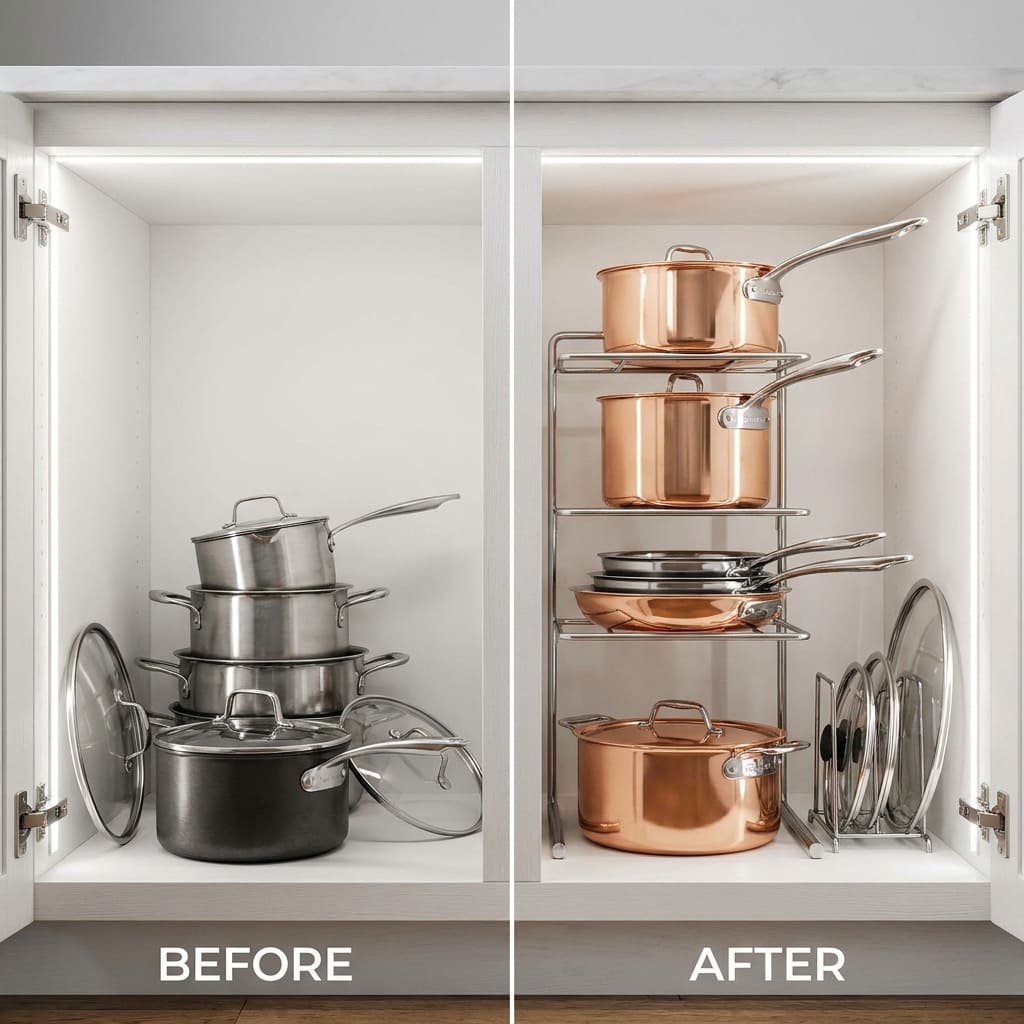
The scoring approach above is useful specifically because it points toward which scenario actually applies to your kitchen, rather than defaulting to the biggest, most expensive storage solution available. A score driven entirely by one bad cabinet needs a different fix than a score driven by a genuinely overflowing cookware collection, and matching the fix to the actual cause is what separates a lasting improvement from money spent on the wrong solution. Buying a large, expensive organizer for a problem that was really just one mismatched lid drawer solves the wrong thing entirely.
What to Look for Once You Know Your Score
Whatever your kitchen storage score turned out to be, a few things are worth keeping in mind while addressing it:
- Fix the specific trouble spot first — a targeted solution for your worst cabinet usually beats a general kitchen-wide overhaul.
- Measure before you buy anything — an organizer that doesn’t physically fit the space just becomes a new form of clutter.
- Prioritize adjustable or flexible options — kitchens and cookware collections change, and a rigid, fixed solution ages worse than one that can adapt.
- Don’t underestimate small daily friction — a few extra seconds of digging for a pan, repeated daily, adds up to real frustration over a year.
- Retake the score in a few months — a genuine fix should measurably lower your score, which is a useful, concrete way to confirm a change actually worked.
- Start with whichever question scored the worst — if one specific question stands out as an obvious yes, that’s usually the highest-leverage place to focus first.
None of this requires an expensive renovation or a full weekend project. Most kitchen storage scores improve meaningfully from addressing just one or two specific trouble spots, rather than an all-at-once overhaul of every cabinet in the room.
Why Putting a Number on It Actually Helps
There’s a reason a simple point-based score works better than just thinking “my kitchen storage is kind of bad.” Vague dissatisfaction is easy to live with indefinitely, since there’s no clear threshold that triggers action — it just sits in the background as a low-grade annoyance.
A concrete number changes that. A 7 out of 8 is harder to shrug off than a general sense of clutter, and it gives you something specific to compare against later, after making a change. This is the same reason budgeting apps and fitness trackers work better than vague intentions to “spend less” or “move more” — specificity creates accountability that fuzzy goals don’t, and a kitchen storage score works on exactly the same underlying principle.
The eight questions above were also chosen specifically because each one points to a genuinely different underlying cause. Question 4 (things falling out) points to a physical space problem. Question 7 (buying duplicates) points to a visibility problem. Question 8 (dreading cooking) points to a cumulative frustration problem. Knowing which specific questions you answered yes to is often more useful than the total number itself, since it turns a single score into a genuine diagnostic tool rather than just a pass-or-fail grade.
Frequently Asked Questions
Is this kitchen storage score based on a real study? It’s a practical diagnostic tool built around common storage complaints, informed by survey data on kitchen clutter and stress, rather than a formal clinical assessment, so treat the number as a useful signal rather than a scientific measurement.
What if I scored high but don’t want to buy anything new? A genuine decluttering pass — donating unused cookware, consolidating duplicates — can meaningfully lower a score on its own, even before adding any new storage tools, and it costs nothing beyond time.
Does a high score mean my kitchen is unsafe or unsanitary? Not necessarily — this score measures friction and frustration, not hygiene, though a cabinet you can’t safely open without something falling is worth addressing for basic safety reasons too, independent of the score itself.
How often should I redo this kitchen storage score? Revisiting it every few months, especially after buying new cookware or reorganizing a specific area, is a simple way to track whether changes are actually working rather than just assuming they helped.
Can this score apply to more than just pots and pans? The specific questions above are built around cookware, but the same scoring logic works reasonably well for other kitchen storage categories, like bakeware, small appliances, or pantry items.
Why do so many people score in the moderate-to-high range? Standard kitchen cabinets are generally built around flat-shelf assumptions that don’t account well for oddly shaped, heavy cookware, which is a structural mismatch more than a personal organization failure.
Is it normal to disagree with your own score after taking it? Yes — some people find their number lower than expected once they actually count up the yeses, while others realize the chaos is worse than it felt day to day; either reaction is a useful data point on its own.
The Bottom Line
A vague sense that your kitchen storage “isn’t great” is easy to live with indefinitely, since there’s no clear moment that forces a fix. Turning that vague feeling into an actual number — even a rough, informal one like this — makes the problem concrete enough to actually act on.
Most people land somewhere in the moderate range, which is good news: it usually means one or two specific trouble spots are driving the whole score, not a kitchen-wide disaster requiring a total overhaul. Find that spot, fix it specifically, and the number tends to drop faster than a vague sense of clutter ever would on its own.
If nothing else, running through these eight questions takes less than two minutes and gives you a genuinely useful starting point — a specific target rather than a general resolution to “get more organized someday” that’s easy to keep postponing indefinitely, one busy week at a time.
This article reflects publicly available survey data and general kitchen organization guidance; individual results can vary based on your specific kitchen layout, cabinet configuration, and cookware collection.