
Tired of pots and pans stacked haphazardly under your sink or crammed into a dead corner cabinet? This pot rack organizer's adjustable, tiered design works around plumbing and awkward spaces, with four configurations to match your exact storage problem.
This post contains affiliate links. If you purchase through a link on this page, we may earn a commission at no extra cost to you. As an AliExpress affiliate, we earn from qualifying purchases.
A pot rack organizer only earns its price if it actually solves the specific storage problem you have, and “pot storage” isn’t really one problem — it’s four different ones, depending on where your kitchen actually falls short. Rather than a standard features-and-specs review, this one is built around four real kitchen storage scenarios, and which configuration of this adjustable pot rack organizer actually fixes each.
This approach matters more for a pot rack organizer than it does for most kitchen products, since this particular item is sold in four distinct configurations rather than one fixed design. Picking the wrong one is the single most common reason a product like this ends up disappointing.
Table of Contents
What Is This Pot Rack Organizer?
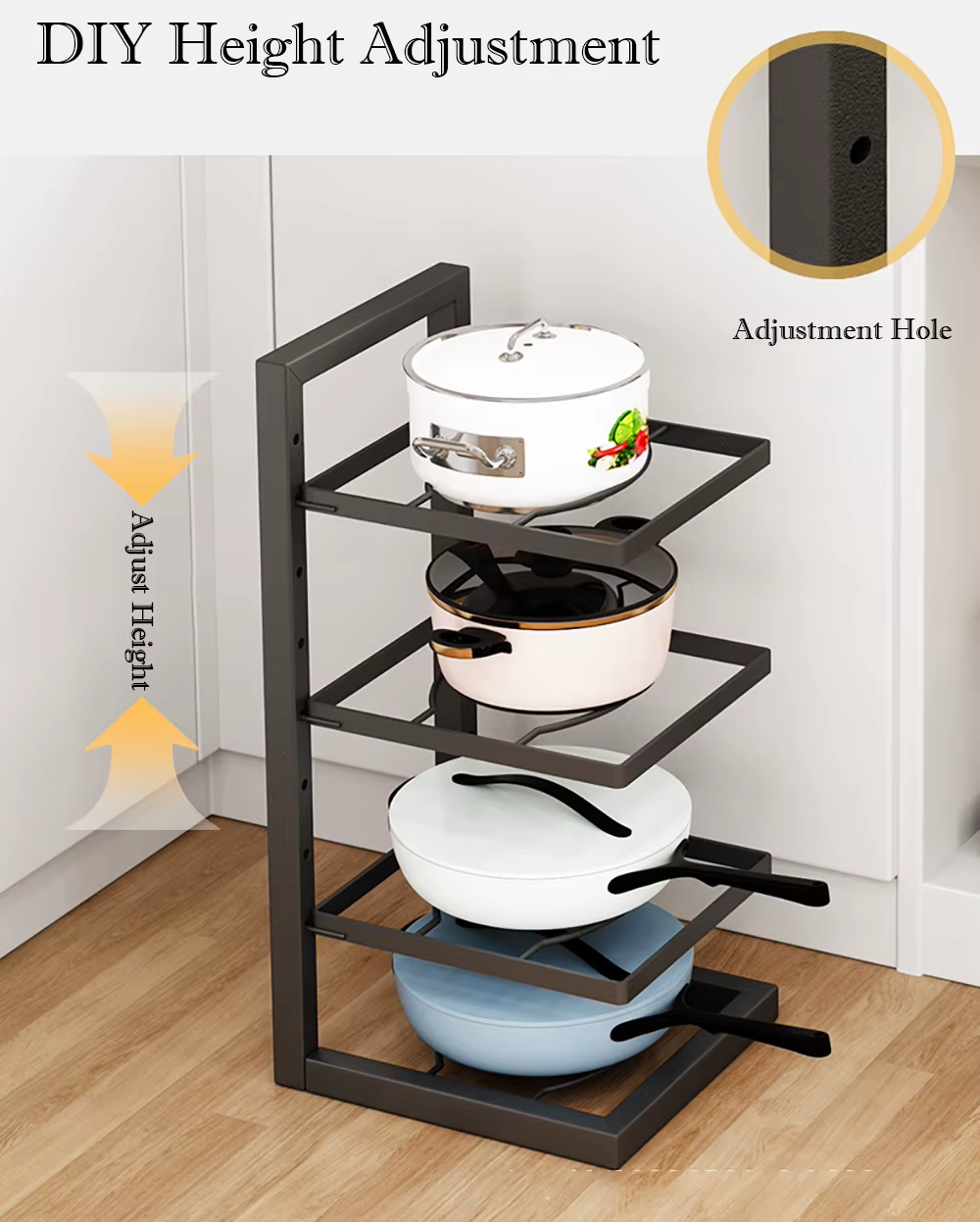
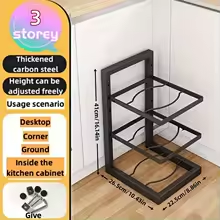
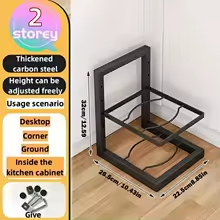
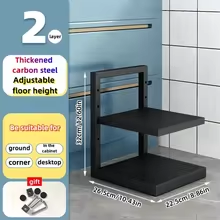
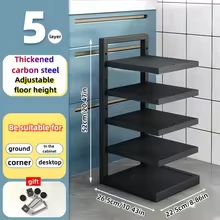
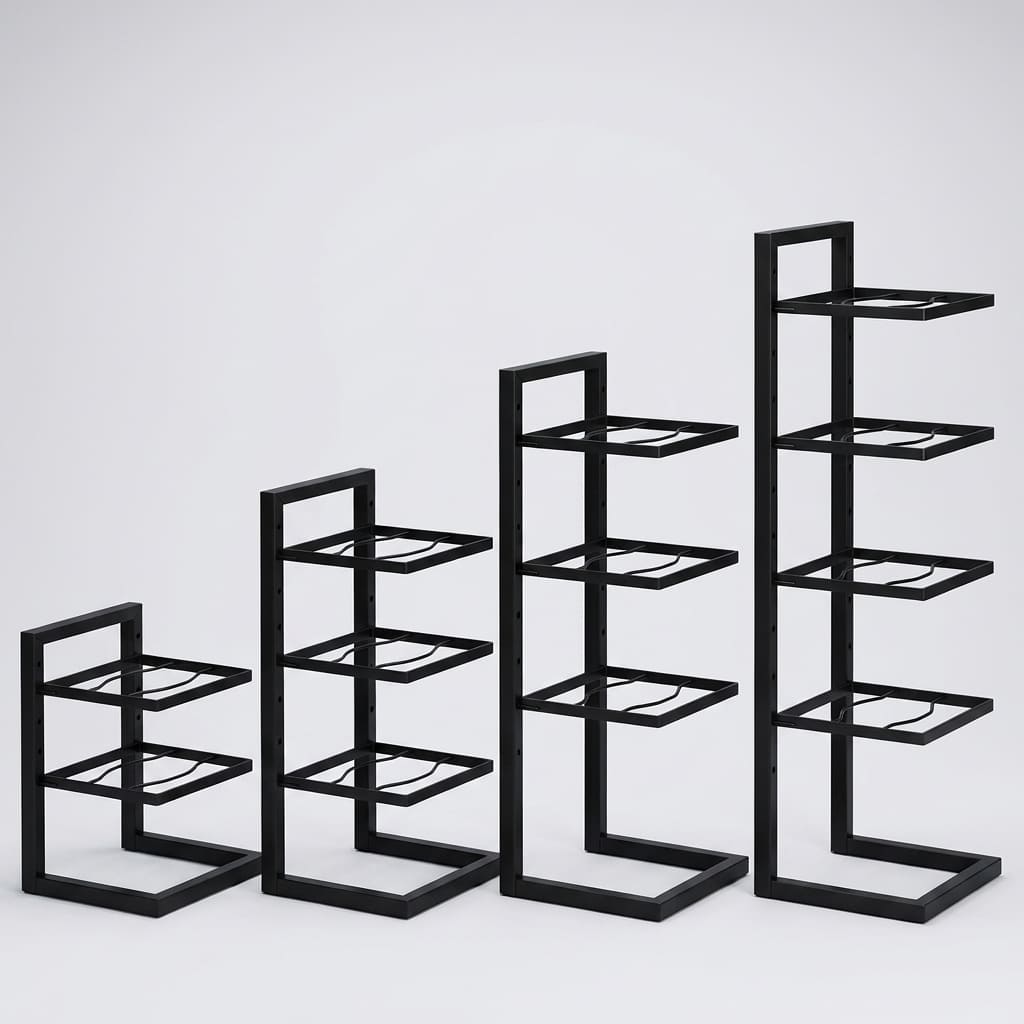
This is a multi-layer carbon steel pot rack organizer designed to hold pots, pans, and lids in a vertical, tiered arrangement, and it’s this exact design that makes it useful across such different kitchen layouts. It’s sold in four configurations — 2, 3, 4, and 5 tiers — and each tier height is adjustable using built-in adjustment holes, so the spacing can be customized to fit taller pots or stacked cookware.
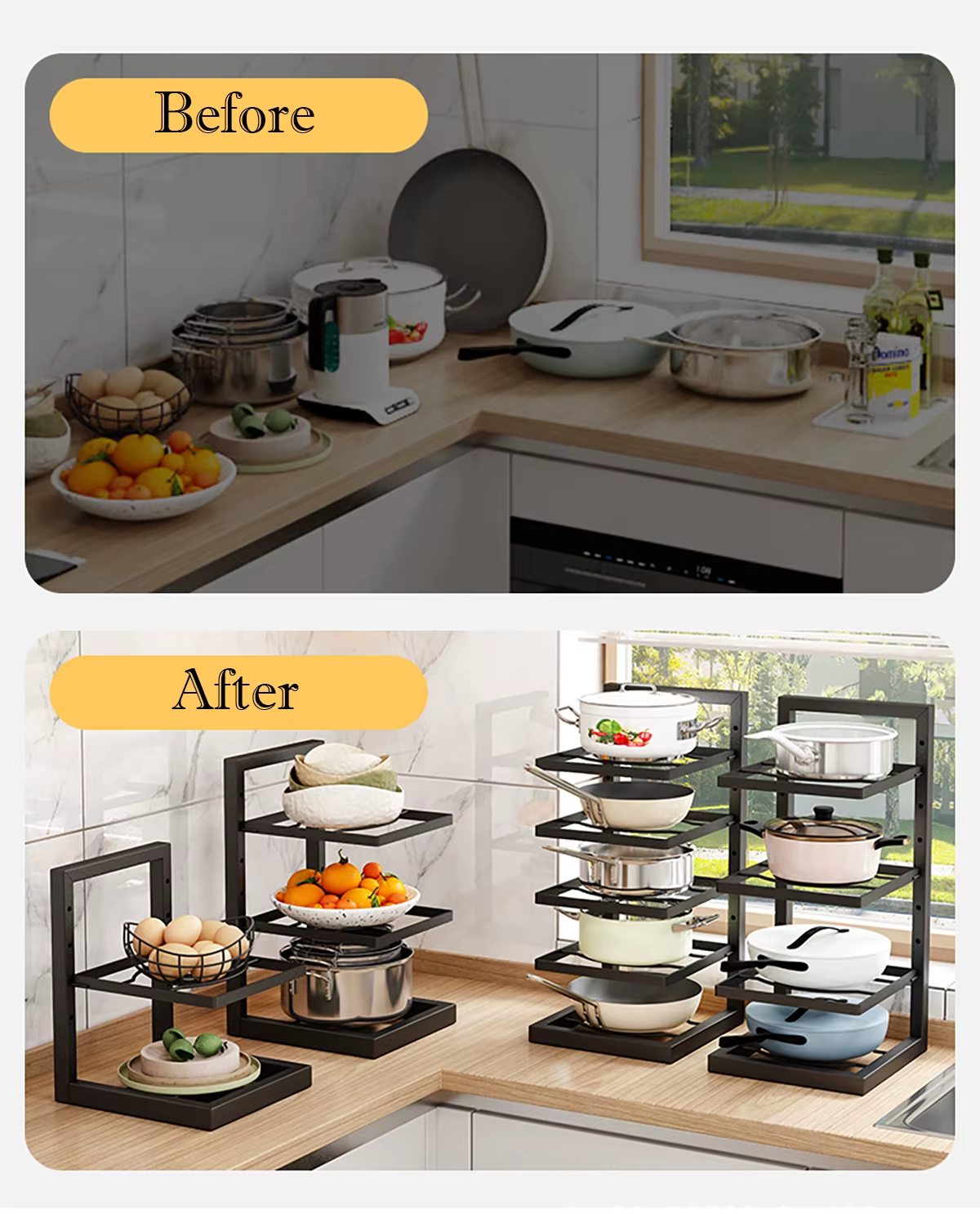
The frame of this pot rack organizer is thickened carbon steel, and each tier has a wire divider pattern designed to keep individual pots and pans from sliding or tipping against each other. This pot rack organizer is designed for flexible placement too — it can sit inside a cabinet, on a countertop, or freestanding on the floor depending on which scenario you’re solving for.
Key Specs for This Pot Rack Organizer at a Glance
- Material: Thickened carbon steel
- Configurations: 2, 3, 4, and 5 tiers
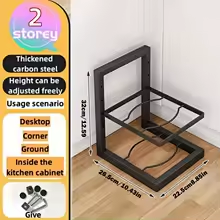
- Height (2-tier): 32cm / 12.59in
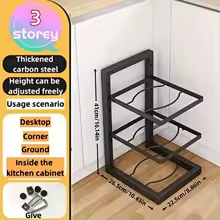
- Height (3-tier): 41cm / 16.14in
- Height (4-tier and 5-tier): 51cm / 20.07in
- Footprint: 26.5cm x 22.5cm (10.43in x 8.86in)
- Height Adjustment: Yes, via built-in adjustment holes
Scenario 1: The Cluttered Under-Sink Cabinet
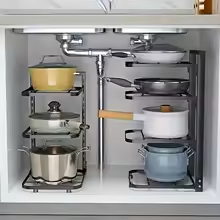
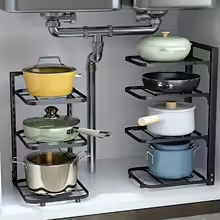
This is one of the most common places people try to store pots with a pot rack organizer, and it comes with a specific complication: the plumbing. A fixed shelf often doesn’t account for the pipe running through the middle of the cabinet, which is exactly where a height-adjustable pot rack organizer earns its keep.
The 2 or 3-tier configuration tends to fit best here, since under-sink cabinets are usually shorter than standard base cabinets. The adjustable tier height lets you work around the pipe rather than against it, positioning shelves above or below the obstruction instead of forcing a fixed-shelf product to fit a space it wasn’t measured for. A pot rack organizer without adjustable tiers would likely need to skip a shelf entirely to clear the plumbing, wasting a meaningful chunk of the cabinet’s total capacity.
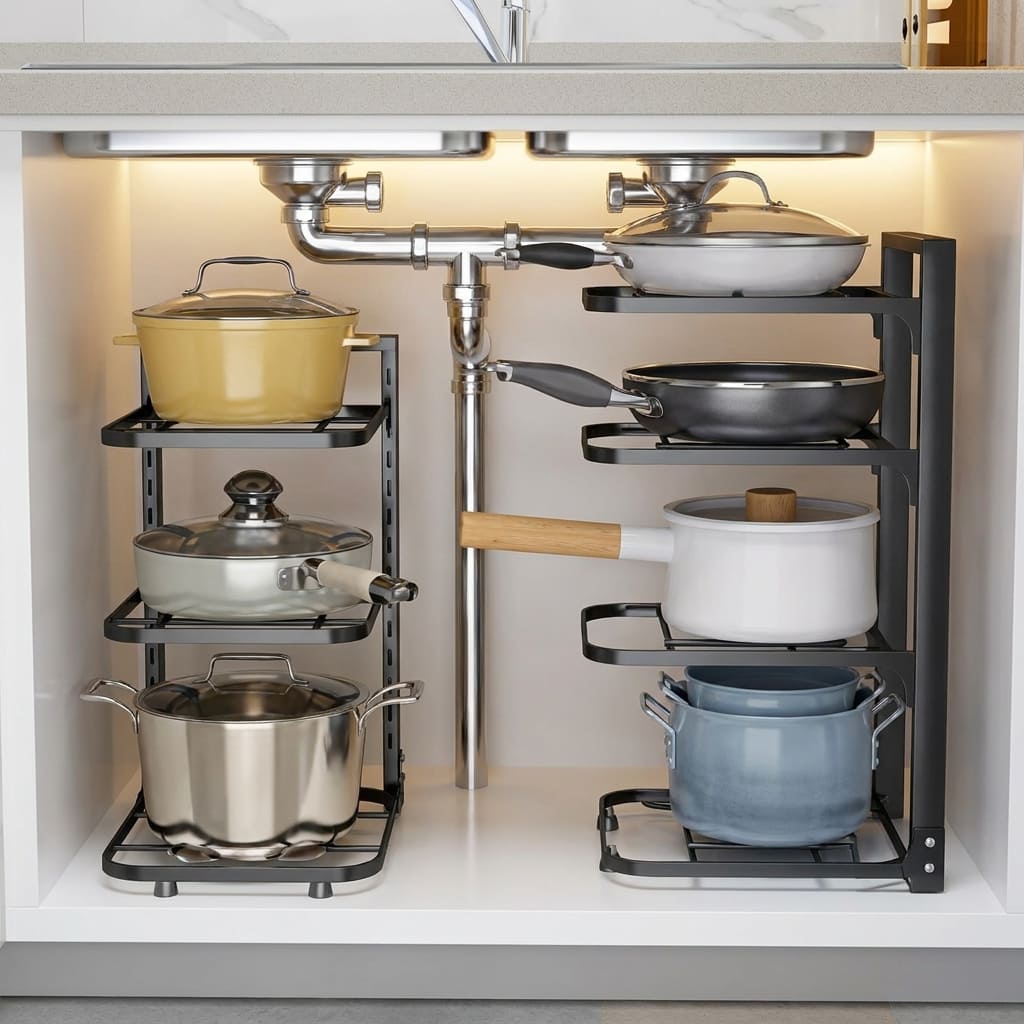
One caution worth passing along: according to Real Homes, storing items under the sink comes with a real moisture and leak risk, so it’s worth keeping an eye on the cabinet for any signs of dampness regardless of what organizer you use there.
Scenario 2: The Dead Corner Cabinet
Corner cabinets are notoriously hard to use efficiently with a standard pot rack organizer, since their depth and shape don’t match most standard-width storage products. This pot rack organizer’s footprint (26.5cm x 22.5cm) is compact enough to tuck into a lot of corner spaces that would otherwise sit mostly empty or become a junk-drawer-style catch-all.
The 3 or 4-tier configuration is generally the better match for a corner cabinet setup with this pot rack organizer, since corner spaces tend to have decent vertical clearance even when the footprint is awkward. According to professional organizer Devin VonderHaar, cited by Real Homes, floor-standing shelving is specifically well-suited to making use of the kind of empty, underused corner space that’s otherwise difficult to organize. A pot rack organizer sized for this exact footprint turns that dead space into genuinely usable storage rather than leaving it as an afterthought.
Scenario 3: No Cabinet Space at All
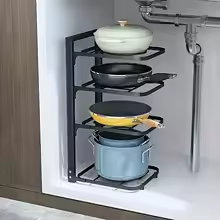
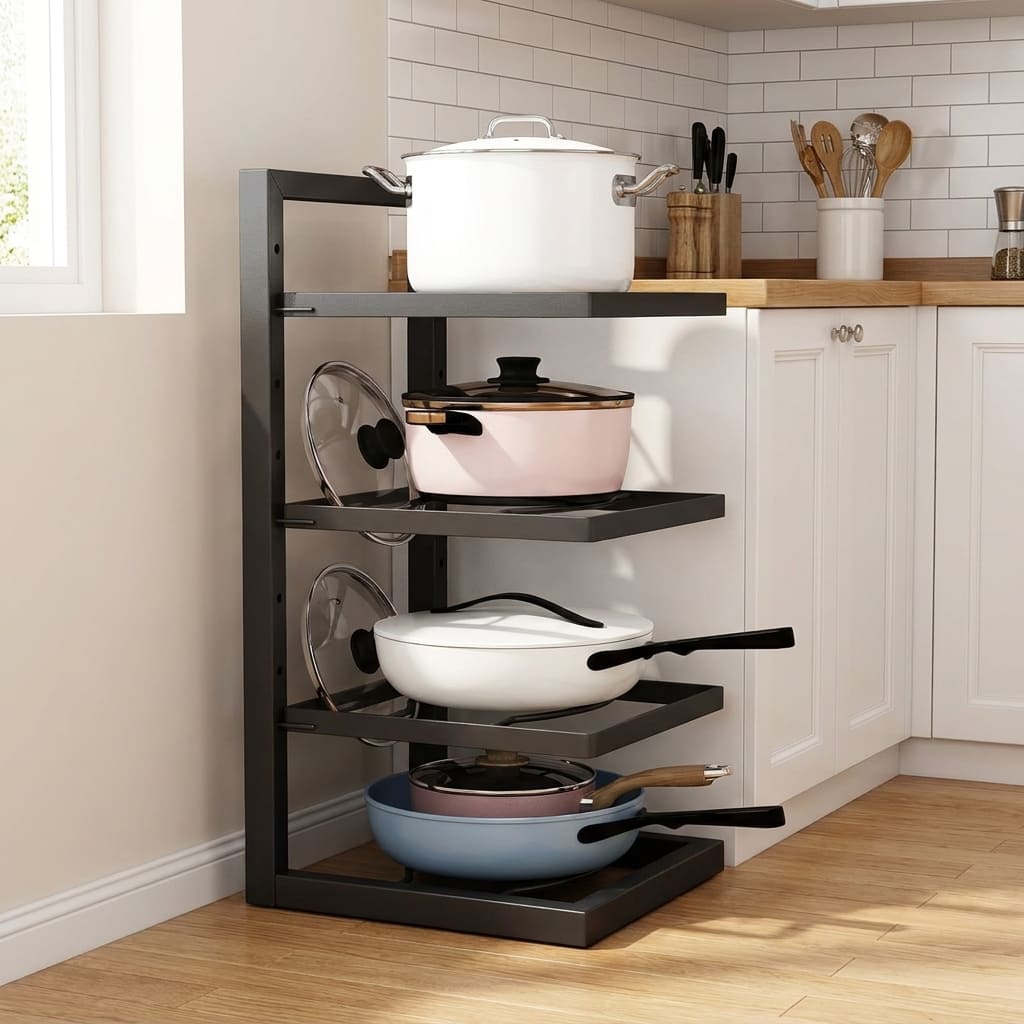
This is the renter’s pot rack organizer scenario, and it’s a common one: no extra cabinet space, no permission to install permanent shelving, and a genuine need for more pot storage regardless. This pot rack organizer’s freestanding design solves this directly, since it works equally well set up on a countertop, tucked against a wall, or placed in an open corner of the kitchen without touching a single wall or cabinet.
Real Homes specifically calls out floor-standing corner shelving as a smart option for renters who can’t hang wall-mounted storage, which is exactly the use case this configuration addresses. The 4 or 5-tier version makes the most sense here, since a taller freestanding pot rack organizer maximizes storage per square foot of floor space used — the scarcest resource in a small kitchen without extra cabinets to spare.
Scenario 4: A Growing Cookware Collection
This scenario is less about a specific broken storage spot for a pot rack organizer and more about outgrowing whatever setup already exists. As cookware collections grow — a new Dutch oven here, an extra skillet there — the stacking-and-hoping method most kitchens default to eventually collapses into exactly the mess a pot rack organizer is meant to prevent.
The 5-tier configuration is built for this scenario specifically, giving each piece of cookware its own level rather than forcing everything into a single stack where the pot you need is always on the bottom. This also addresses a specific complaint professional organizers raise about unorganized cookware storage: needing to unstack an entire pile just to reach one item at the bottom. A pot rack organizer with enough tiers essentially eliminates that problem by design, since every piece gets its own dedicated shelf.
How the Height Adjustment Actually Works
Each tier connects through a series of adjustment holes along the vertical frame, allowing the shelf spacing to be repositioned to fit taller pots, stacked lids, or unusually shaped cookware. This is a manual, tool-optional adjustment rather than a spring-loaded or tool-free mechanism, so expect a few minutes of setup time to dial in the spacing that fits your specific cookware collection.
Because the adjustment holes are fixed at set intervals rather than infinitely variable, there’s a practical limit to how finely the height can be tuned on this pot rack organizer — it’s meaningfully adjustable, not a fully custom system. For most cookware collections, the available increments are close enough to make this a minor limitation rather than a real dealbreaker.
Comparing the Four Configurations
Since this particular pot rack organizer isn’t a single product but a family of four, it’s worth laying out the practical differences side by side rather than treating them as one generic listing.
The 2-tier configuration is the most compact, at 32cm tall, and works best for genuinely tight spaces like a shallow under-sink cabinet or a small secondary storage spot. The 3-tier steps up to 41cm, striking a middle ground that fits many standard under-sink and corner cabinets without requiring a fully freestanding footprint.
The 4-tier and 5-tier configurations both reach 51cm, with the 5-tier packing an extra shelf into that same overall height. These taller versions of the pot rack organizer are the ones best suited to freestanding, countertop, or open-corner placement, where floor space is the limiting factor rather than cabinet height.
What to Look for in a Pot Rack Organizer
If you’re comparing this pot rack organizer against other pot rack organizer options, a few things are worth checking:
- Configuration count — match the pot rack organizer’s tier count to your actual scenario (under-sink, corner, freestanding, or growing collection) rather than defaulting to the biggest option available.
- Footprint versus available space — measure your actual cabinet or corner before buying any pot rack organizer, since even a compact pot rack organizer needs to physically fit the space.
- Material and load capacity — a thickened steel pot rack organizer generally handles heavier cast iron and Dutch ovens better than thin wire alternatives.
- Adjustment mechanism — confirm whether the pot rack organizer’s height adjustment is truly tool-free or requires some manual reconfiguration, since this affects how easily you can change the setup later.
- Stability on uneven or tight surfaces — a freestanding pot rack organizer should sit flat and stable, particularly if it’s going inside a cabinet with an uneven base.
Who Should Buy This Pot Rack Organizer?
This pot rack organizer is a good fit for anyone dealing with one or more of the four scenarios above: an awkward under-sink cabinet, a wasted corner, no available cabinet space, or a cookware collection that’s outgrown its current storage. The multiple configuration options mean it’s less a single product and more a small product family, so matching the tier count to your actual problem matters more than defaulting to the largest option.
It’s probably not the right fit for anyone with ample, well-organized cabinet space already, or anyone who specifically wants a wall-mounted or hanging storage solution rather than a floor-standing one. For households with a mix of pot rack organizer storage problems — an under-sink issue and a growing cookware collection, for example — buying two different configurations of the same pot rack organizer can actually make more sense than trying to solve both problems with one unit. If kitchen organization is a broader project for you, our Kitchen Picks reviews cover other options worth comparing.
How We Evaluated This Product
This review of the pot rack organizer is based on the manufacturer’s published specifications, dimensions, and configuration options, cross-referenced against professional kitchen organization guidance on corner storage, under-sink cabinet limitations, and cookware storage best practices.
Frequently Asked Questions
Which configuration should I buy for an under-sink cabinet? The 2 or 3-tier configuration of this pot rack organizer typically fits better in shorter under-sink cabinets, and the adjustable height helps work around plumbing.
Is it safe to store pots and pans under the sink? It can work in a pinch, but experts generally caution that under-sink cabinets carry a real moisture and leak risk, so it’s worth monitoring the space and avoiding storage there if leaks are a recurring issue.
Can this pot rack organizer be used outside of a cabinet? Yes, it’s a freestanding design that works on countertops, in open corners, or against a wall without any mounting hardware.
How difficult is the height adjustment to use? This pot rack organizer uses fixed adjustment holes along the frame rather than a fully custom or spring-loaded mechanism, so it takes a few minutes of manual setup rather than an instant adjustment.
What’s the difference between the 4-tier and 5-tier versions? Both share the same overall height in the listed specifications, with the 5-tier version fitting an additional shelf into the same vertical space, meaning slightly tighter spacing between each tier.
Does this pot rack organizer work for very heavy cast iron cookware? This pot rack organizer’s thickened carbon steel frame is built for genuine load-bearing use, though it’s worth checking the specific weight limits for your heaviest pieces before loading up every tier.
Can I buy more than one configuration of this pot rack organizer for different spots in my kitchen? Yes, since each configuration is sold separately, it’s entirely reasonable to buy a shorter version for an under-sink cabinet and a taller freestanding version for a corner or countertop, addressing multiple storage scenarios in the same kitchen.
Final Verdict on This Pot Rack Organizer
The real value of this pot rack organizer isn’t any single feature — it’s the fact that it comes in four configurations built around four genuinely different kitchen storage problems. Matching the right tier count to your actual scenario (under-sink, corner, freestanding, or overflow) is what determines whether this feels like the right purchase or an oversized piece of steel taking up space.
For anyone who’s identified their specific kitchen storage problem from the scenarios above, this pot rack organizer is a reasonable, adjustable solution. For anyone still unsure which configuration fits, measuring the actual space first is worth the five minutes it takes, since the wrong tier count is the most common way a product like this ends up disappointing.
Ultimately, the question isn’t whether this pot rack organizer works — the carbon steel construction and adjustable tiers are solid, functional basics. The question is whether you bought the right configuration for the specific problem sitting in your kitchen right now, which is exactly why this review was built the way it was.
This article reflects publicly available product information and general kitchen organization guidance; individual results can vary based on your specific cabinet dimensions and cookware collection.