

This robot window cleaner pairs 3000PA suction with a UPS battery failsafe and physical safety rope, designed specifically for upper-floor use.
This post contains affiliate links. If you purchase through a link on this page, we may earn a commission at no extra cost to you.
Washing windows from the outside, especially above the first floor, is one of the few household chores most people actively avoid rather than just dislike. This robot window cleaner is built specifically to remove that problem from the list entirely, and after digging into this robot window cleaner’s full spec sheet, safety systems, and verified user manual, it’s a genuinely well-engineered answer to a chore most people put off for months at a time.
Table of Contents
What Is This Robot Window Cleaner?
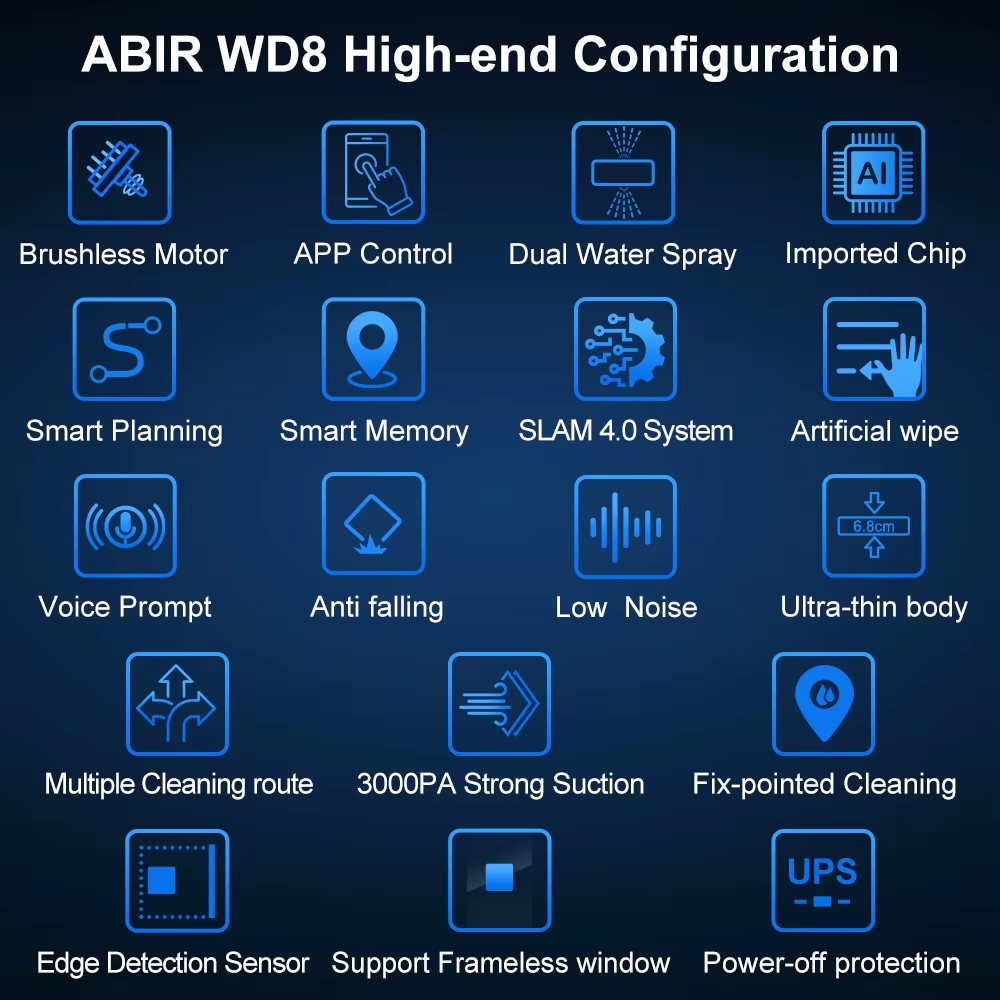
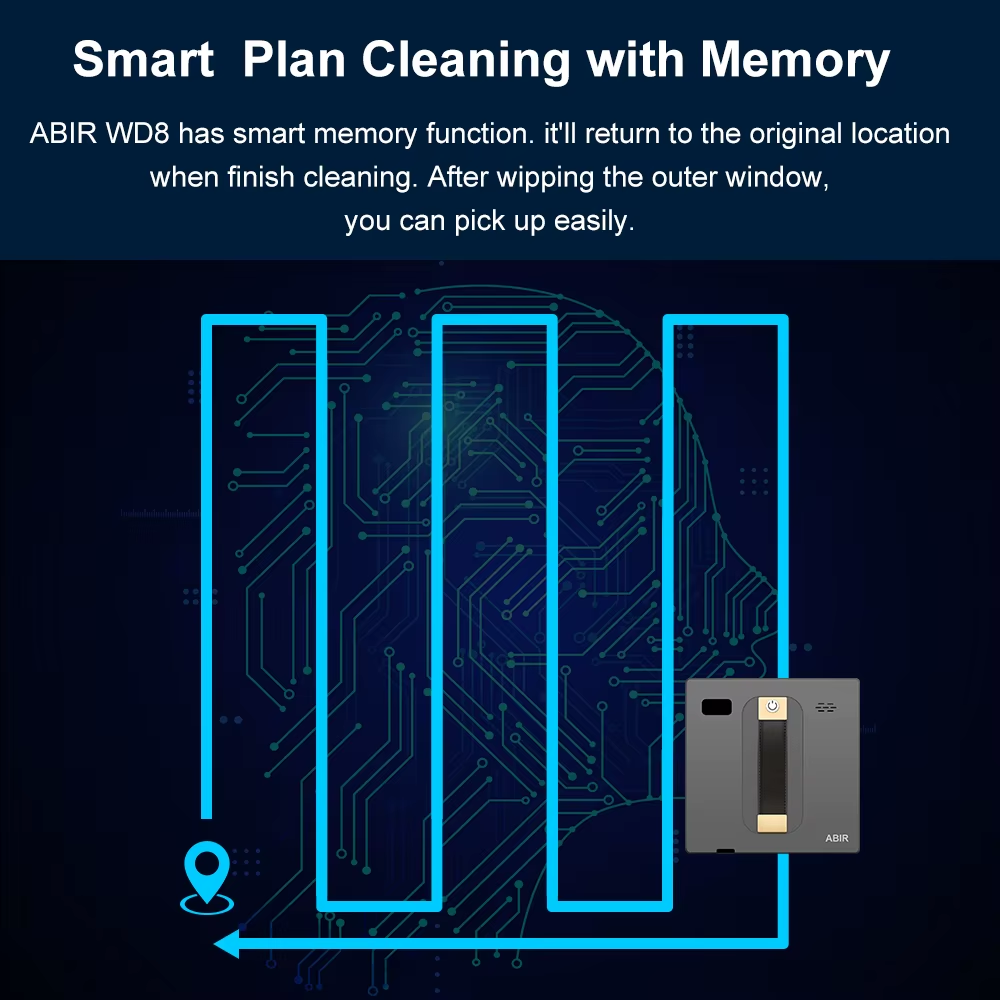
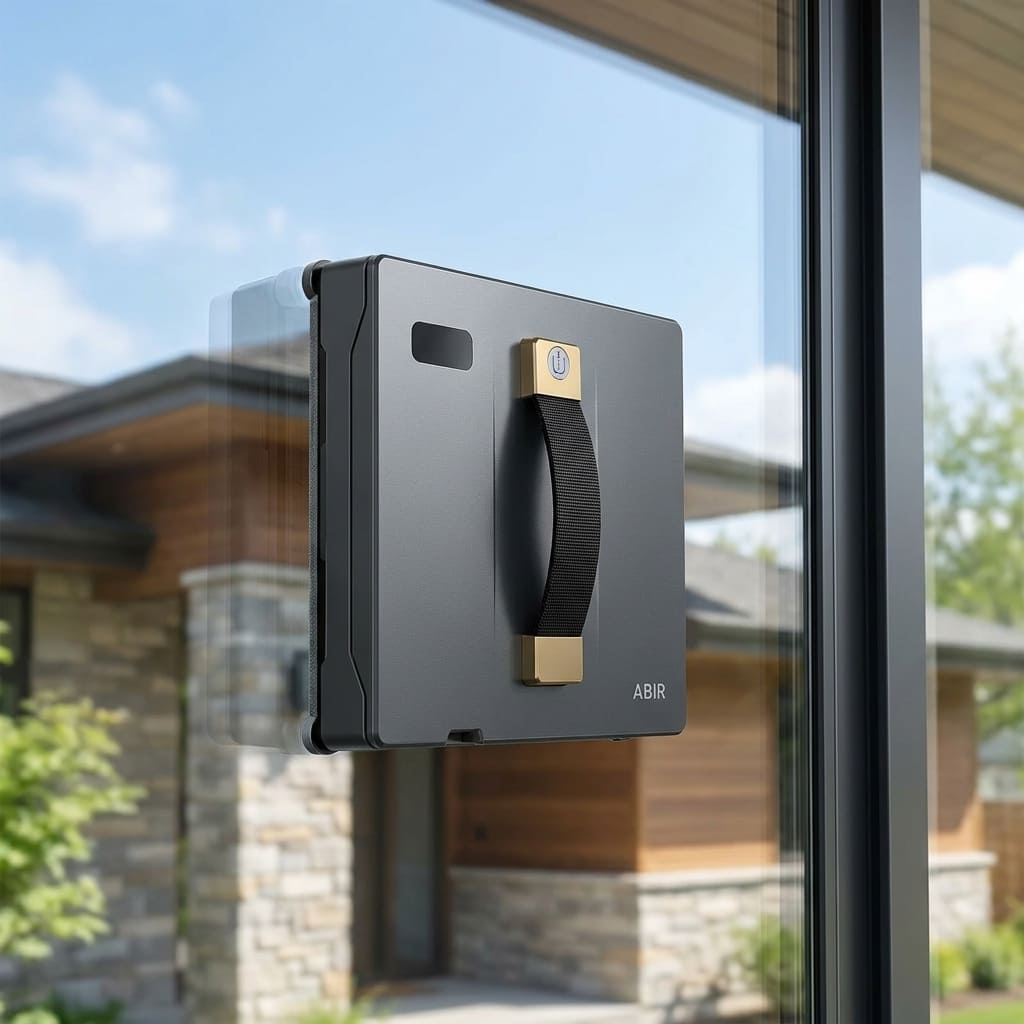
This is the ABIR WD8, a suction-mounted window cleaner that adheres directly to glass and cleans using a brushless motor, dual water spray nozzles, and a microfiber pad system. It’s sold through ABIR’s official AliExpress store, backed by a 3-year manufacturer warranty on this robot window cleaner, and it’s built around real navigation hardware rather than a simple back-and-forth wipe mechanism — the robot uses laser sensors and an onboard mapping system to plan its own cleaning route in real time.
Unlike a basic window vacuum you push by hand, this robot window cleaner operates independently once it’s mounted: fill the tank, attach the safety rope, select a mode, and it handles the rest, including automatically adjusting its path when it detects a window’s edge.
Key Specs at a Glance
- Suction power: 3000PA, sufficient to hold the robot securely on vertical glass
- Navigation: SLAM-based smart memory system with laser edge detection (0.3-second response)
- Battery backup: 650mAh built-in battery providing roughly 40 minutes of power-failure protection
- Cleaning modes: 4 total (N-path, Z-path, N+Z deep clean, and fixed-point spot cleaning)
What to Look for in a Robot Window Cleaner
Not every suction-based cleaning robot on the market is engineered the same way, and a few details separate a genuinely safe, effective robot window cleaner from one that’s a liability on a second-story window. Anyone shopping for a robot window cleaner should check for all five of these before buying.
- A real anti-fall system, not just suction — suction alone can fail during a power cut; a proper robot window cleaner needs a backup power system to hold position until it’s retrieved.
- A physical safety tether — regardless of how good the electronics are, a mechanical safety rope anchored separately from the suction mechanism is non-negotiable for any robot window cleaner used above ground level.
- Genuine edge detection, not a timer-based path — a robot window cleaner that only follows a fixed pattern risks driving itself off the edge of the glass; laser-based edge detection actually senses where the window ends.
- Reasonable noise levels — since this kind of robot window cleaner runs for 15–30 minutes per session, anything above roughly 65 decibels becomes genuinely disruptive in a home environment.
- Washable, reusable cleaning pads — a robot window cleaner that requires disposable pads adds ongoing cost that a washable microfiber system avoids entirely.
How the Navigation and Cleaning Modes Actually Work
This robot window cleaner uses what ABIR describes as an SLAM-based system — the same category of mapping technology used in robot vacuums — combined with onboard laser sensors that detect a window’s edges within roughly 0.3 seconds and adjust the cleaning path accordingly. In practice, that means the robot window cleaner isn’t guessing where the glass ends; it’s actively sensing it.
The four cleaning modes give some real flexibility depending on how dirty the window actually is. The N and Z modes run a single standard wipe pattern in either a vertical or horizontal path, while the combined N+Z mode runs both patterns for a more thorough pass — useful for a robot window cleaner tackling a window that hasn’t been cleaned in a while. Fixed-point mode holds the robot in place while spraying and wiping repeatedly, which is the mode to reach for on a stubborn, localized stain rather than running a full cycle over the entire pane.
This kind of mode variety matters more than it might seem on paper. A robot window cleaner running the same fixed pattern regardless of how dirty the glass actually is tends to either under-clean heavily soiled windows or waste time and water over-cleaning already-clean ones. Being able to choose N, Z, N+Z, or fixed-point on this robot window cleaner means it can be matched to the actual job rather than forcing every window through an identical cycle.

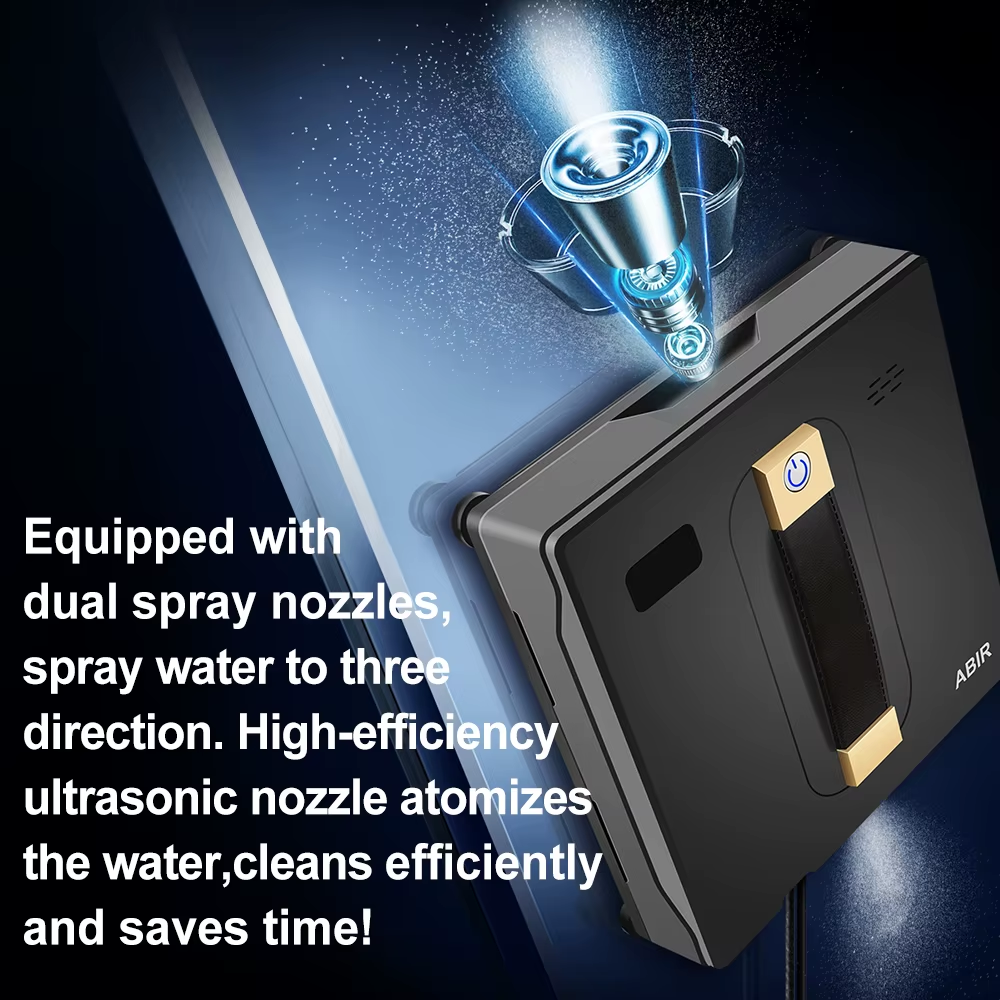
The dual water spray system adds another layer to how this robot window cleaner performs in practice. Rather than a single nozzle, two spray points work in coordination to cover a wider area per pass, which the manufacturer states improves cleaning coverage by roughly 90% compared to a single-spray design on a comparable robot window cleaner. Whether or not that exact figure holds up under independent testing, the underlying logic is sound: two spray points covering more surface area per pass means fewer passes are needed to achieve full coverage, which in turn means a shorter total cleaning cycle for this robot window cleaner on any given window.
Safety Features Worth Understanding Before You Buy
Because this robot window cleaner physically adheres to glass — often several feet or stories above ground — its safety systems matter more than almost any spec on the sheet. The CPSC’s own guidance on preventing window falls underscores exactly why this matters for anyone considering a robot window cleaner: activity in and around upper-floor windows carries real fall risk, which is precisely the scenario a robot window cleaner is designed to remove a person from entirely rather than just make more convenient.
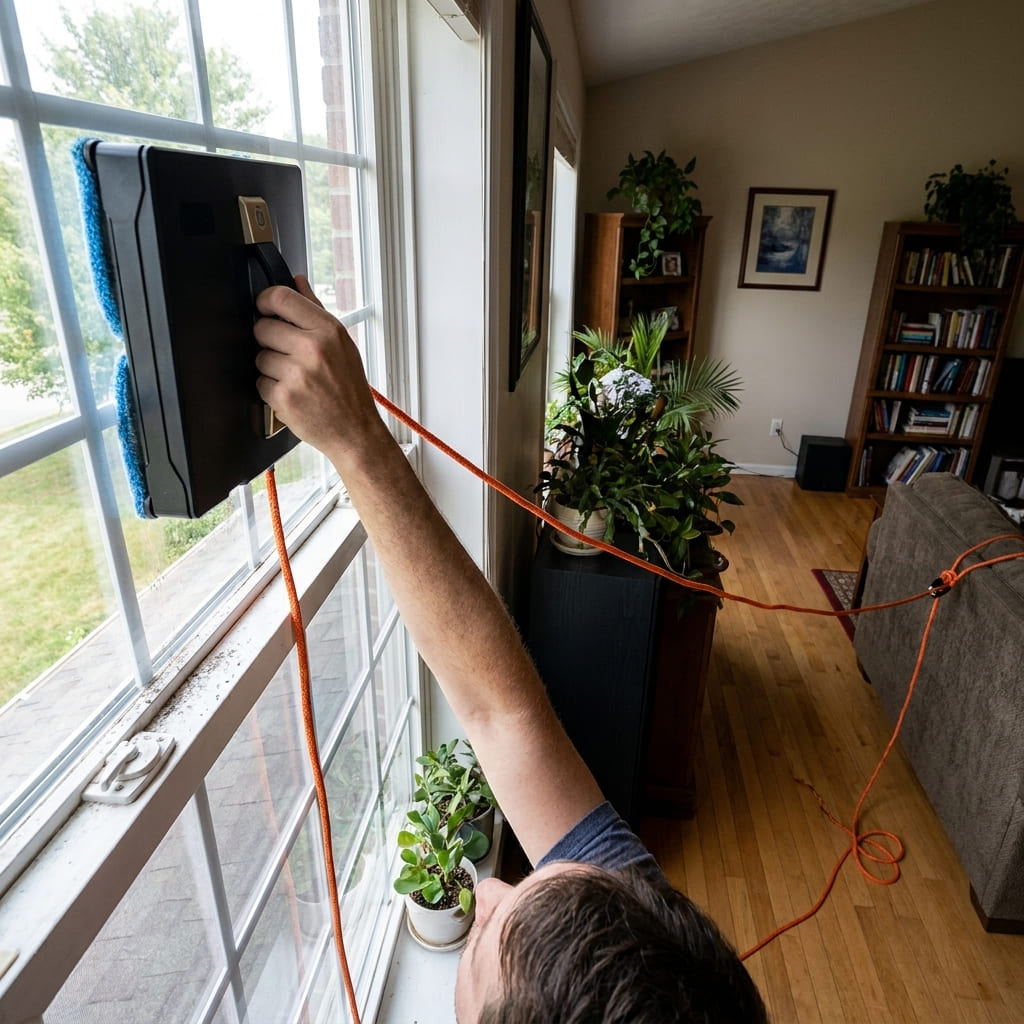
That said, no robot window cleaner should rely on suction and battery backup alone. The included safety rope is meant to be anchored independently before every use, and skipping that step defeats the purpose of having a backup system in the first place — a robot window cleaner is only as safe as the setup process behind it.
It’s worth being direct about what these safety systems do and don’t cover. A robot window cleaner with a strong suction rating and a battery backup is still only as reliable as the surface it’s mounted on — cracked, damaged, or heavily textured glass can compromise the seal regardless of how capable the electronics are. The manufacturer’s own documentation explicitly warns against using this robot window cleaner on compromised glass for exactly this reason, which is a detail worth taking seriously rather than treating as boilerplate legal language.
The vertical load rating also matters more than most buyers initially consider. This robot window cleaner is rated to hold up to roughly 7kg vertically, which accounts for the robot’s own weight plus the water in its tank — a spec that only becomes relevant in the rare event of a partial suction failure, but one that reflects a manufacturer that engineered for that scenario rather than assuming it would never happen.
Maintenance and Long-Term Care
The microfiber cleaning pads that come with this robot window cleaner are machine washable and designed for repeated reuse, which keeps the ongoing cost of ownership lower than a disposable-pad system. After each session, removing and rinsing the pads before they fully dry helps prevent buildup that can reduce cleaning effectiveness over time.
Regular maintenance for any robot window cleaner also means keeping the sensors themselves clean — dust or residue on the laser sensors can interfere with edge detection, which is part of why the manufacturer’s manual specifically calls out sensor cleaning as a maintenance step rather than an optional one.
Water tank maintenance is the other recurring task worth building into a routine. Since this robot window cleaner relies on a consistent water supply for its dual spray system to function, running the tank dry mid-cycle triggers a low-water voice prompt and pauses the spray function, which can leave streaking on the glass if the robot window cleaner’s cycle continues without water. Checking the tank level before starting any session, rather than assuming it’s full from the last use, avoids this entirely.
How This Compares to Manual Window Cleaning
The most honest comparison isn’t to other robot cleaners on the market — it’s to the manual alternative most people are actually replacing. A squeegee and a bucket require no specialized equipment and cost far less upfront, but they also require physically reaching every pane, which becomes genuinely difficult or unsafe above the ground floor without a ladder or professional service.
A robot window cleaner shifts that trade-off entirely: higher upfront cost, but the physical reach problem disappears completely. For anyone in a multi-story home, or anyone who has previously paid for professional exterior window cleaning, the cost comparison tends to favor the robot window cleaner within a year or two of regular use, assuming it’s used consistently rather than sitting in a closet after the first few tries.
There’s also a category of buyer for whom a robot window cleaner isn’t really competing against a squeegee at all — it’s competing against not cleaning the windows regularly in the first place. For anyone who has let exterior glass go months or years between cleanings because the manual process felt like too much effort relative to the payoff, a robot window cleaner that can be set up and left to run removes the effort barrier entirely, which tends to matter more for actual follow-through than the raw cleaning quality comparison on paper.
Who Should Buy This Robot Window Cleaner
This is a strong fit for anyone with second-story or higher windows who has been paying for professional cleaning, or anyone who simply avoids the chore because of the physical difficulty of reaching exterior glass safely. Owning a robot window cleaner tends to pay for itself fastest in exactly this scenario. The 3-year warranty and CE certification are reasonable signals of manufacturer confidence for this robot window cleaner’s price range — similar in spirit to the build quality we found worth calling out in our fingerprint padlock review, another smart gadget where the manufacturer’s own certifications ended up mattering more than the marketing copy.
It’s probably not worth it for someone with only ground-floor windows that are easy to reach by hand, since the main value of a robot window cleaner is solving the reach and safety problem — a problem that doesn’t really exist for windows you can already clean comfortably with a squeegee. If you’re building out a smart home setup and this robot window cleaner is just one piece of it, it’s also worth checking our wireless doorbell review for another AliExpress smart gadget pick that follows the same app-and-remote control pattern.
How We Researched This Robot Window Cleaner
This review is based on the manufacturer’s published specifications, the official user manual (cross-referenced across multiple independent manual archives to confirm consistency), and verified retailer spec sheets that matched the AliExpress listing’s own stated details. Live pricing was extracted directly from the listing at the time of writing, showing a discount from $420.00 to $121.80 — pricing on AliExpress fluctuates frequently, so this should be confirmed against the current listing before purchase.
Frequently Asked Questions
Is this robot window cleaner actually safe to use on upper-floor windows? The combination of suction, a UPS-backed 40-minute battery failsafe, and a separate physical safety rope is specifically designed for exactly this use case with this robot window cleaner. Following the setup instructions — particularly anchoring the safety rope independently — is essential to that safety system actually working as intended.
How loud is this robot window cleaner during operation? The manufacturer lists noise at 65 decibels or below, which is comparable to normal conversation volume — noticeable but not disruptive for most households.
Can this robot window cleaner be used on any type of window? It’s designed for smooth, flat glass surfaces including standard windows, mirrors, and similar surfaces like marble countertops or smooth tile. It’s not designed for cracked, damaged, or heavily textured glass.
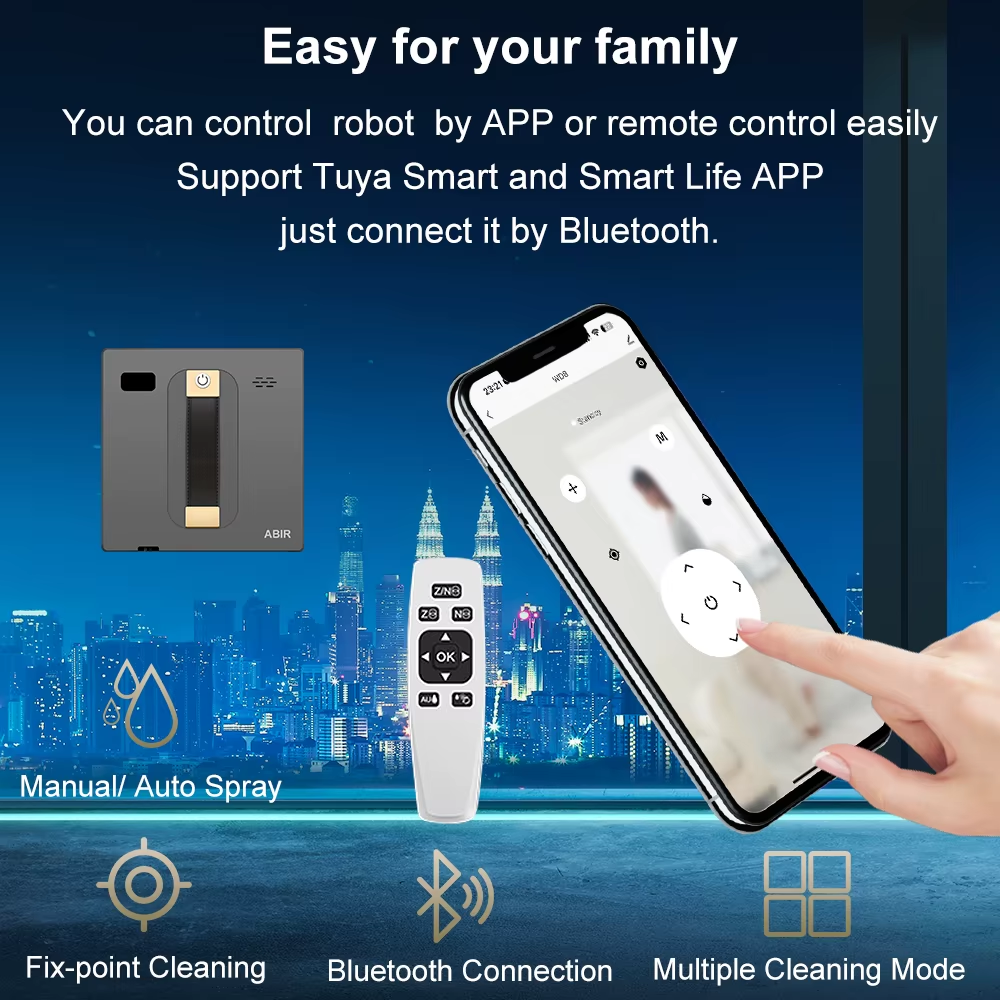
Does this robot window cleaner require Wi-Fi or a subscription? It connects via Bluetooth to the Tuya Smart or Smart Life app for smartphone control, and it also includes a physical remote control that works independently of any app connection. No subscription is required for either control method.
How long does a typical cleaning cycle take? Cycle time depends on window size and the mode selected, with the combined N+Z deep-clean mode taking longer than a single-pass N or Z mode, since it runs two full patterns instead of one.
Final Verdict on This Robot Window Cleaner
For anyone who has been avoiding exterior window cleaning because of the physical difficulty or safety concerns of reaching upper-floor glass, this robot window cleaner addresses the actual problem rather than just offering a marginally easier manual tool. The combination of real edge-detection navigation, a genuine mechanical and electronic safety system, and washable, reusable cleaning pads suggests this particular robot window cleaner was engineered by people who understood the actual risk profile of a device that clings to glass several feet off the ground.
Buy this robot window cleaner if reach and safety are the real obstacles keeping your windows dirty. Skip it if your windows are already easy to reach by hand, since the core value proposition doesn’t apply to a chore that was never physically difficult in the first place.
This article reflects publicly available product information and manufacturer documentation, and is not a substitute for checking current pricing, availability, and the most recent customer reviews directly on the product listing before purchase.